How Much Does a UK Bookkeeper Cost vs AI Tools? (2026 Price Comparison)
How Much Does a UK Bookkeeper Cost vs AI Tools? (2026 Price Comparison)
Last updated: October 2026
⚠️ Xero price update: Xero UK increased subscription prices on 1 September 2026. Ignite rose from £16 to £18/mo, Grow from £37 to £39/mo, Comprehensive from £50 to £55/mo, and Ultimate from £65 to £70/mo (all ex. VAT). Prices in this article reflect the new September 2026 rates. See Xero's pricing update page.
If you're a UK sole trader or small business owner, you've probably asked yourself at some point: do I actually need a bookkeeper, or can software handle this now? In 2026, with AI-powered accounting tools starting at under £20 a month, it's a fair question. The honest answer is that it depends — on the complexity of your finances, your confidence with numbers, and what you actually need done.
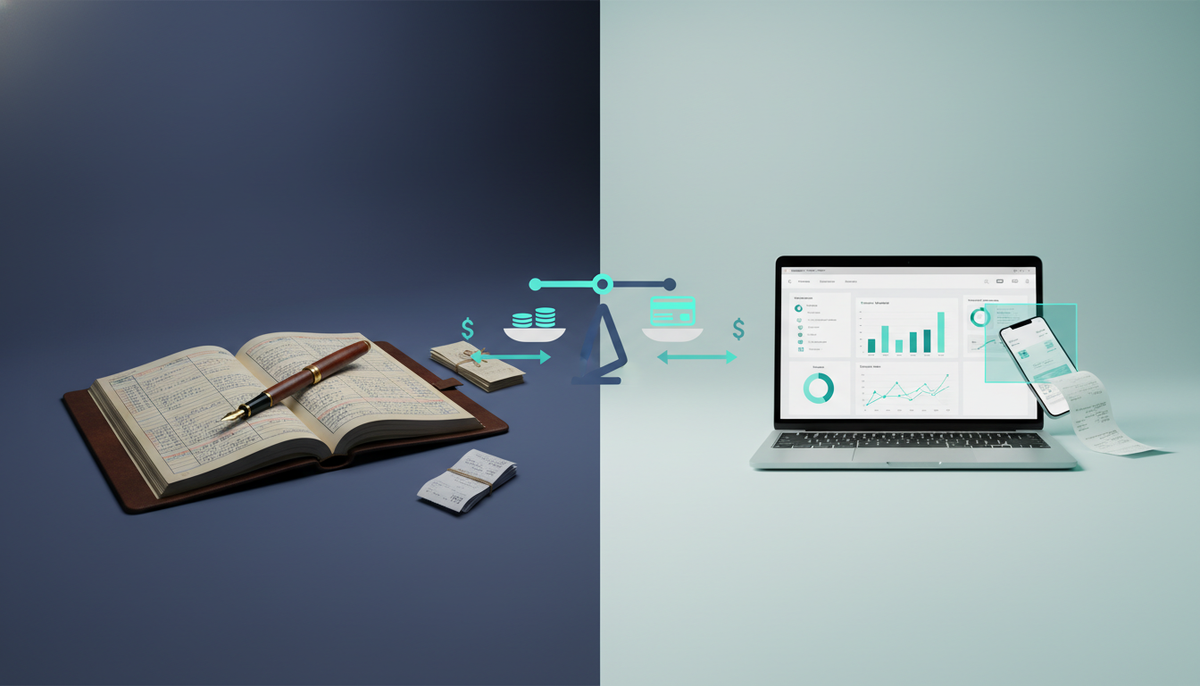
This article gives you the real numbers on both sides. UK bookkeeper hourly rates and monthly retainers, alongside current AI tool costs, so you can make an informed decision rather than guess. We'll also cover the hybrid model — using AI tools to handle the day-to-day while a bookkeeper reviews the important stuff — which is what most sensible sole traders land on.
Want to see how much of your bookkeeping AI can handle? Try Dext free for 14 days — no card required.
TL;DR
- A UK bookkeeper costs £22–£45/hour, or £80–£300/month on a retainer for typical sole trader volumes
- AI bookkeeping tools run £16–£39/month for a full accounting package; receipt capture add-ons from ~£7/month
- Most sole traders find the hybrid model works best: AI tools for data capture and reconciliation, a bookkeeper for quarterly review and annual returns
What Does a UK Bookkeeper Actually Cost in 2026?
There's no single rate — what you pay depends on the bookkeeper's qualifications, your location, and the volume of work involved. Here's how it breaks down in practice.
UK Bookkeeper Hourly Rates
| Level | Hourly Rate | Typical Profile |
|---|---|---|
| Entry-level / unqualified | £12–£22/hr | Freelance, limited experience |
| Standard competent bookkeeper | £22–£40/hr | Self-employed, established practice |
| ICB or AAT-qualified | £25–£45/hr | Formally certified, regulated |
| Senior / specialist | £50–£90/hr | Complex needs, London, sector-specific |
The national median is £33.36/hour according to the 6 Figure Bookkeeper 2025 pricing report — a survey of over 1,000 UK bookkeeping practices. London bookkeepers typically charge £30–£55/hour, reflecting local demand even for remote workers.
Monthly Retainer Costs
Most bookkeepers working with sole traders and small businesses charge a fixed monthly fee rather than hourly. The retainer covers a set volume of transactions and usually includes bank reconciliation, basic expense categorisation, and a quarterly check-in.
| Business Type | Monthly Cost | Typical Scope |
|---|---|---|
| Sole trader, up to 50 transactions | £80–£150/month | Basic bank rec + expenses |
| Small business, 50–200 transactions | £150–£300/month | Full bank rec + payroll prep |
| VAT-registered, with returns | £250–£600/month | Full bookkeeping + quarterly VAT |
The median monthly fee in the 6 Figure Bookkeeper survey was £150.50 for routine sole trader work. Add VAT registration and you can expect that to jump significantly — VAT return preparation typically adds £60–£120 per quarter on top of the base retainer.
Bear in mind these figures are for bookkeeping only, not accounting or tax filing. If you want an accountant to prepare and submit your Self Assessment, that's an additional cost — usually £300–£600/year for a simple sole trader return.
What AI Bookkeeping Tools Cost in 2026
The range here is wide, from genuinely free options to professional-grade platforms at £50+/month. The key distinction is between full accounting software (which handles everything from invoicing to bank feeds and MTD ITSA submissions) and receipt capture tools (which automate data entry and integrate with your accounting software).
For a detailed breakdown of which accounting platform suits different business types, the Sage vs Xero vs QuickBooks comparison covers the main platforms in full.
Full Accounting Software (2026 UK Pricing)
| Tool | Entry Plan | Mid Tier | MTD ITSA | Best For |
|---|---|---|---|---|
| Xero Ignite | £18 | Grow: £39 | ✅ Yes | Growing sole traders, bookkeeper handoff |
| QuickBooks Simple Start | ~£14–16/mo | Essentials: ~£28–38/mo | ✅ Yes | Invoicing-heavy sole traders |
| FreeAgent | £19/mo (or FREE) | — | ✅ Yes | NatWest/RBS/Mettle customers |
| Sage Start | £20 | Standard: £39/mo | ⚠️ Standard only | Established businesses already on Sage |
A quick note on Sage: the £18/month Start plan looks competitive, but it does not support MTD ITSA quarterly submissions. If you're within the MTD ITSA scope (self-employment or property income over £50,000 from April 2026), you need Sage Standard at £43/month. This catches a lot of people out.
FreeAgent is the most interesting value case. At £19/month for sole traders, it's already among the cheapest HMRC-recognised platforms — but NatWest, RBS, Ulster Bank, and Mettle business account holders get it completely free. If you bank with any of those providers, it's worth checking the FreeAgent 2026 review before paying for anything else.
Receipt Capture Add-Ons
Full accounting software handles invoicing, bank feeds, and tax submissions. But if you want to automate the capture of receipts, purchase invoices, and expense documents, you'll typically pair it with a dedicated capture tool. These use OCR and AI to extract data from photos or emails and push it directly into your accounting software — saving the 3–5 hours a month most sole traders spend manually entering transactions.
- Dext Prepare: Starts at approximately £24–30/month on annual billing. The most widely used capture tool in UK practice. Integrates directly with Xero, QuickBooks, and Sage. Try Dext free for 14 days →
- Receipt Bot: Credit-based model starting at around £7–9/month for 45 documents. Strong value for low-volume sole traders. See our Receipt Bot review for a full breakdown.
- Hubdoc: Included free with Xero Grow and above; available standalone for around £12/month. Solid for document fetching (bank statements, utility bills) rather than receipt scanning.
For a thorough side-by-side comparison of all the major receipt tools, the best receipt capture software guide covers each one in detail.
What You Actually Get (and Don't Get) From Each Option
The cost comparison only tells part of the story. What matters is whether the tool or person actually solves your specific problem.
What a human bookkeeper provides
- Catches errors and inconsistencies a rule-based system would miss
- Provides judgment calls on edge cases (is this expense allowable?)
- Can correspond with HMRC on your behalf if issues arise
- Prepares year-end accounts and liaises with your accountant
- Gives you someone to call when something goes wrong
What AI tools handle well
- Automatically extracting data from receipts, invoices, and bank statements
- Categorising transactions using rules and machine learning
- Bank reconciliation (matching transactions to statements)
- Generating MTD-compliant quarterly updates and sending them to HMRC
- Producing P&L reports, cash flow summaries, and VAT returns
What AI tools still can't reliably do
- Advise on tax planning or allowable expenses for your specific circumstances
- Respond to HMRC enquiries or represent you in disputes
- Spot fraud, error patterns, or inconsistencies requiring human judgment
- Handle complex situations: property income, overseas earnings, capital gains
If your finances are straightforward — single income source, limited expenses, no employees — good software will likely handle 80–90% of your bookkeeping needs. If you have any complexity at all, the software handles the data work while a bookkeeper or accountant handles the interpretation.
The Hybrid Model: What Most Sole Traders Actually Use
The question isn't really "bookkeeper or software" — it's usually "how much of each?" The most cost-effective setup for a typical 12-client sole trader in 2026 looks something like this:
- Xero Ignite: £20 — handles bank feeds, invoicing, MTD ITSA submissions
- Dext Prepare (annual): ~£24/month — automates receipt capture and purchase invoice processing
- Bookkeeper (quarterly review): ~£50–80/month (2–3 hours per quarter at £25–30/hr) — checks categorisation, flags issues, prepares for accountant handoff
Total: roughly £90–120/month. Compare that to a full bookkeeper retainer of £150–300/month for the same volume, and you're saving £30–180/month while getting a faster, more automated workflow. To see how this stack fits together in practice, the complete AI bookkeeping stack guide walks through the full setup step by step.
The key insight is that AI tools handle volume and speed; bookkeepers handle judgment and accountability. Using both means you're not paying a bookkeeper £33/hour to type in receipts that software can process in seconds.
How MTD ITSA Changes the Calculation
From 6 April 2026, sole traders and landlords with qualifying income over £50,000 are required to submit quarterly digital updates to HMRC under Making Tax Digital for Income Tax (MTD ITSA). The first quarterly submission deadline falls on 7 August 2026.
This has a practical consequence: if you're within scope, you now must use HMRC-recognised software to maintain digital records and submit quarterly. A spreadsheet won't be sufficient. This shifts the calculation slightly — software isn't optional any more, so the question becomes which platform to use and whether you still need a bookkeeper alongside it.
The good news: Xero, QuickBooks, FreeAgent, and Sage Standard are all HMRC-recognised for MTD ITSA. Any of these can submit your quarterly updates directly. For a full breakdown of which platforms are approved and what the submission process involves, the MTD ITSA software guide covers the detail.
For those below the £50,000 threshold in 2026 (the requirement drops to £30,000 from April 2027), software is still strongly advisable — the quarterly discipline it imposes tends to save significant time at year-end regardless of whether you're mandated.
The Right Pick For Your Situation
You're a sole trader with under 50 transactions/month and simple finances: Software only is probably sufficient. Xero Ignite (£18/month) or FreeAgent (£19/month, or free with qualifying bank accounts) will handle everything you need. Review quarterly yourself or pay a bookkeeper for one hour per quarter.
You have 50–150 transactions/month and a mix of expenses: The hybrid model makes sense. Pair accounting software with Dext for receipt capture, and budget a bookkeeper for 2–3 hours per quarter to review categorisation and prepare for your accountant.
You're VAT-registered: A bookkeeper for VAT returns is still worth the cost for most people — mistakes on VAT returns carry penalties and the rules are detailed enough that human review pays for itself. Software handles the record-keeping; a bookkeeper handles the return.
You're a NatWest, RBS, or Mettle account holder: Get FreeAgent free immediately and assess whether you need anything else after three months. Most sole traders find it covers 90% of their needs without additional cost.
You have complex finances (property income, overseas earnings, capital gains): Don't try to go software-only. Pay for a qualified bookkeeper or accountant. The savings from getting it right far outweigh the cost of professional help.
Related Reading
- The Complete AI Bookkeeping Stack for UK Sole Traders (Under £60/Month) — how to build a full automated setup for less than you'd pay a bookkeeper
- 5 AI Tools for UK Bookkeepers That Pay for Themselves in a Week — the time-savings case for automation, with real numbers
- Xero vs QuickBooks for UK Sole Traders: Which Is Better in 2026? — if you're choosing between the two most popular platforms
Affiliate disclosure: Some links in this article are affiliate links. If you sign up through them, we may earn a commission at no extra cost to you. We only recommend tools we've genuinely assessed.