Receipt Bot Review 2026: The Budget-Friendly Dext Alternative
Receipt Bot Review 2026: The Budget-Friendly Dext Alternative for UK Bookkeepers
If you've priced up receipt capture software for your bookkeeping practice and winced at what Dext charges, you're in good company. Receipt Bot has been building a quiet following among sole traders and small practices who need automated document capture without the premium price tag. This review covers what Receipt Bot actually does, what it costs UK users in 2026, how it handles MTD digital records requirements, and — most importantly — whether it makes sense for your practice over better-known alternatives.
The short version: Receipt Bot starts at around £7 per month (prices are billed in USD — more on that below), combines automated OCR with human verification, and connects directly to Xero, QuickBooks, Sage, and FreeAgent. It is not an HMRC-approved MTD submission platform in its own right, but it does help you maintain the digital records that MTD ITSA demands. Whether that trade-off works depends on your client volume and how much of Dext's feature set you'd actually use.
Try Receipt Bot free — no commitment required
TL;DR
- Receipt Bot starts at £6/month — a fraction of Dext's practice pricing floor of ~£190/month
- Human operators verify every data extraction, which may improve accuracy on messy or handwritten documents
- Best for sole traders and bookkeepers with 1–5 clients who want reliable receipt capture without the overhead of a full practice management platform
What Is Receipt Bot?
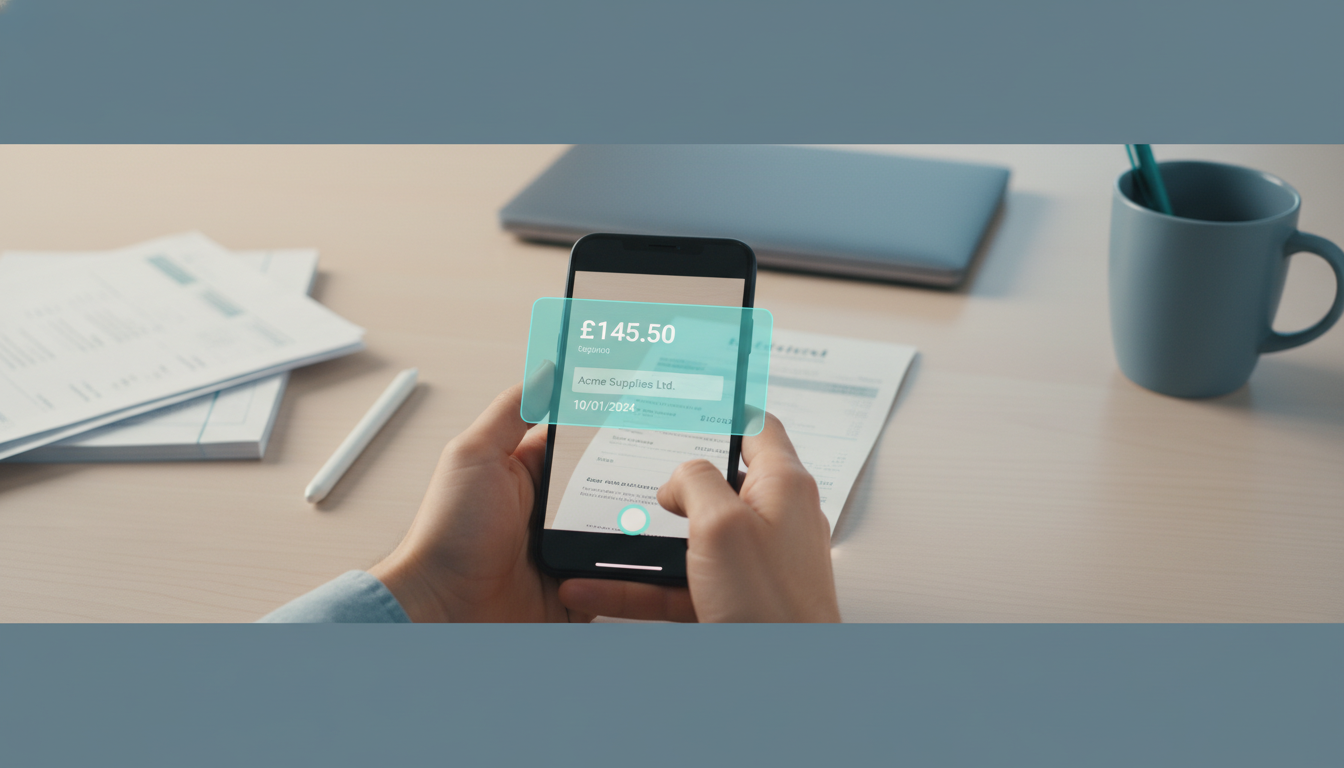
Receipt Bot is a document capture and automated data extraction platform designed for accountants, bookkeepers, and small businesses. You feed it receipts, purchase invoices, and bank statements — via mobile photo, email forwarding to a dedicated address, or direct desktop upload — and it extracts the relevant financial data: supplier name, date, gross amount, VAT amount, net amount, and line items where the document contains them.
The company's defining claim is its hybrid AI-plus-human model. Automated optical character recognition handles the initial read, then qualified human operators review and correct the output before it reaches your accounting software. Receipt Bot positions this as a quality-control layer that catches errors missed by pure OCR — particularly on handwritten receipts, faded thermal paper, and low-resolution scans. In a world where most sole traders still accumulate a mixture of crisp digital PDFs and borderline-illegible paper slips, that verification step has practical value.
The company holds UK VAT registration (VAT number GB474687832), which is relevant for GDPR and data residency considerations. Receipt Bot is designed for bookkeepers, accountants, and the small businesses they serve — it is not an enterprise tool and does not claim to be one.
Receipt Bot UK Pricing (2026)
One thing to flag upfront: Receipt Bot now publishes its prices directly in GBP on its pricing page, though the company bills UK customers and is UK VAT-registered. The figures below are converted — check the Receipt Bot pricing page for current figures, as GBP pricing is shown directly on the Receipt Bot website.
| Plan | Approx. Price (GBP) | Credits/month | Best For |
|---|---|---|---|
| Starter | £6/month | £6/month | Sole traders, very low document volume |
| Growth | £14/month | £14/month | Solo practitioner managing 2–4 clients |
| Business | £39/month | £39/month | Small practice with higher document volumes |
| Premium | £119/month | £119/month | Larger practice, multiple users, higher throughput |
For context: Dext's practice pricing starts at around £190/month as a minimum before per-client fees kick in above the included allowance. If you are a sole trader running your own books, or a bookkeeper serving three or four clients, the difference between £7–£21/month and £190+/month is meaningful. Receipt Bot's lower entry point is one of the most straightforward value propositions in the receipt capture category.
Receipt Bot vs Dext: Head-to-Head
The full comparison lives in our Dext vs Receipt Bot deep-dive, but here is the summary for those who need a quick decision framework. Both tools do the same core job — they extract financial data from receipts and invoices and push it to your accounting software. The differences are in price, depth, and who they're built for.
| Feature | Receipt Bot | Dext |
|---|---|---|
| Entry price (approx.) | £6/month | ~£190/month (practice minimum) |
| Data extraction method | AI OCR + human verification | Primarily AI/OCR |
| Line-item extraction | ✓ Yes | ✓ Yes |
| Xero integration | ✓ Yes | ✓ Yes |
| FreeAgent integration | ✓ Yes | ✗ No |
| Bank statement processing | ✓ Yes | ✓ Yes |
| Practice management features | Limited | Comprehensive |
| Direct HMRC MTD submission | ✗ No (feeder tool) | ✗ No (feeder tool) |
| GBP pricing page | No (USD only) | No (opaque) |
| Free trial | ✓ Yes | ✓ Yes (14 days) |
The headline difference is price. For a solo practitioner or small practice, Dext charges a floor rate that makes sense only once you have enough clients to spread the cost. Receipt Bot has no such floor. You can start on the Starter plan at £6/month and upgrade only when your volume demands it.
Dext wins on practice management depth. Client portals, multi-user team workflows, publisher rules, and detailed practice dashboards are all part of Dext's proposition — and if you're managing 15 or 20 clients, those features earn their keep. But if you're not using them, you're paying for them anyway. That's the core of the Receipt Bot vs Dext decision: how much of Dext's feature set do you actually need? If you read our full Dext review and found yourself mentally ticking off maybe half the features, Receipt Bot is worth a closer look.
Key Features in Practice
Human-Verified Data Extraction
Receipt Bot's most distinctive claim is the human review layer. When you submit a document, automated OCR does the initial reading, then a qualified operator checks and corrects the extraction before it's delivered to your accounting software. Receipt Bot states this approach handles difficult documents — handwritten receipts, degraded thermal prints, low-resolution scans — better than pure automation. For UK bookkeepers working with clients in trades, hospitality, or retail, where receipt quality varies considerably, this matters in practice.
Line-Item Extraction
Most receipt capture tools pull header data: total, VAT, supplier name, and date. Receipt Bot also extracts individual line items from invoices, allowing costs to be split across categories or cost centres at the document level. This is available across all plans, not reserved for higher tiers.
Multiple Input Channels
Documents enter Receipt Bot via mobile photo capture (iOS and Android), email forwarding to a dedicated per-account address, direct desktop upload, or bulk import. The email forwarding option is particularly useful for sole traders who receive most of their purchase invoices by email — forward them in as they arrive and Receipt Bot queues them for processing automatically.
Supplier Learning and Auto-Categorisation
Receipt Bot builds supplier coding rules over time. Once you've assigned a supplier to a specific account code, subsequent receipts from that supplier are categorised the same way. The human verification layer reduces miscoding before it reaches your accounting software — which, in practice, means less time cleaning up wrongly coded transactions in Xero or QuickBooks at month end.
Bank Statement Processing
Beyond receipts and invoices, Receipt Bot can process bank statement PDFs — extracting transactions for reconciliation. Less relevant if you're using a bank with a direct Open Banking feed into your accounting software, but a genuine time-saver for clients on older banking arrangements or anyone who hasn't yet set up automatic bank feeds.
Integrations: Xero, QuickBooks, Sage, and FreeAgent
Receipt Bot integrates directly with Xero, QuickBooks, Sage Business Cloud, and FreeAgent. For the vast majority of UK sole traders and small practices, that covers every realistic accounting software combination.
The FreeAgent integration is particularly worth flagging. FreeAgent is often free for business current account holders at NatWest, RBS, and Mettle — meaning a meaningful segment of UK sole traders are on FreeAgent at no software cost. Dext does not offer a FreeAgent integration; Receipt Bot does. If FreeAgent is your accounting platform, Receipt Bot immediately jumps to the front of the queue for receipt capture.
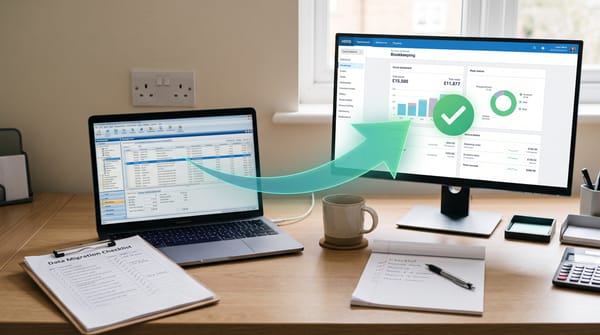
For Xero users, Receipt Bot slots in as the document capture layer in a broader stack. You'd use it to capture and categorise purchase documents, with the coded transactions pushing to Xero for bank reconciliation, VAT returns, and reporting. The workflow is similar to how Dext connects to Xero — our guide to setting up document capture with Xero covers the general process, though it focuses on Dext. Receipt Bot's Xero setup follows the same OAuth connection pattern.
If you are still deciding between Xero and QuickBooks as your primary accounting package — which affects which receipt capture tools make sense — our Xero vs QuickBooks comparison for UK sole traders covers the practical differences in detail.
MTD ITSA and Digital Records
MTD for Income Tax Self Assessment became mandatory from April 2026 for businesses and landlords with qualifying income above £50,000. It requires digital record-keeping and quarterly updates to HMRC via compatible software.
Receipt Bot's role within MTD is specific and worth being clear about: it helps you maintain the digital records that MTD requires, but it is not itself an HMRC-approved submission tool. You would use Receipt Bot to capture and categorise expense documentation, with that data feeding into Xero, QuickBooks, or another HMRC-recognised platform that handles the actual quarterly submissions to HMRC.
Receipt Bot's own documentation is straightforward on this. Their blog states that the tool supports "digital records keeping" as required under MTD — meaning it helps you build the underlying documentation trail that MTD compliance depends on, but the submission step goes through your accounting software. If you need to understand which accounting platforms are approved for direct MTD ITSA filing, our guide to HMRC-approved MTD ITSA software covers the current list in full.
What Users Actually Say
Receipt Bot's review footprint is thinner than Dext's. At time of writing, there are around 8 reviews on Trustpilot — all positive — with similar patterns on G2 and Capterra. Common themes in user feedback: accurate data extraction, responsiveness from the support team, and strong price-to-value for smaller practices.
The limited review count has two interpretations. On one hand, there is less independent evidence of performance at scale or under pressure than exists for Dext or AutoEntry. On the other hand, Receipt Bot hasn't accumulated the volume-related complaints — slow processing queues, support backlogs — that accompany rapid growth. AccountingWEB has covered Receipt Bot positively in the UK market, characterising the tool as aimed at "accounting data revolution" for smaller practices. The professional consensus, where it exists, is favourable but not yet robust in volume.
For a broader market perspective covering multiple receipt capture tools, our best receipt capture software for UK bookkeepers review covers Dext, Hubdoc, AutoEntry, Datamolino, and Receipt Bot with more comparative context.
Limitations Worth Knowing
- USD billing introduces currency risk. Receipt Bot prices in US dollars. At 1 USD = ~£0.79, the Starter plan costs £6/month — but sterling weakness increases that. For annual budget planning, this is worth factoring in, though for most small practices the sums involved are modest enough that it doesn't matter much in practice.
- Practice management features are limited. If you're managing 10 or more clients and need client portals, multi-user team workflows, and detailed practice dashboards, Receipt Bot is not a substitute for Dext's practice-management layer. It is a document capture and data extraction tool — not a full practice platform.
- Thin independent review track record. With under 10 Trustpilot reviews at time of writing, there is less peer evidence available than for Dext or AutoEntry. If community validation is a meaningful factor in your buying process, that's a fair concern.
- Not a direct HMRC submission tool. Receipt Bot is not on the HMRC-approved software list for MTD ITSA submission. It works as a feeder into compatible accounting software, not as a standalone MTD pathway.
- Document limits by plan. Like all receipt capture tools, Receipt Bot caps document volumes per plan. Check current limits carefully at sign-up — exceeding your plan mid-month may trigger overage charges or require an upgrade.
Who Should Use Receipt Bot?
Receipt Bot makes most sense for:
- Sole traders managing their own books who want affordable automated receipt capture
- Solo bookkeepers with 1–5 clients who need document capture automation without Dext's practice price floor
- FreeAgent users who need a dedicated receipt capture integration (Dext doesn't offer one)
- Practices where document quality is variable and human verification adds a meaningful accuracy improvement
- Anyone building a lean, cost-efficient bookkeeping stack at under £30/month total
Consider alternatives if:
- You're managing 10+ clients and need client portals, team workflows, and detailed practice reporting
- You process high document volumes where Dext's per-client bundling becomes cost-competitive
- A deep community and review track record is important to your buying decision
If you're putting together a complete lean bookkeeping setup — receipt capture, accounting software, and MTD compliance — our guide to building a full AI bookkeeping stack for under £60/month covers how these tools fit together for a 5–10 client sole practitioner.
Related Reading
- Dext vs Receipt Bot: Which Is Right for Your Solo Bookkeeping Practice?
- Best Receipt Capture Software for UK Bookkeepers (2026)
- The Complete AI Bookkeeping Stack for UK Sole Traders (Under £60/Month)
Affiliate disclosure: Some links in this article are affiliate links. If you sign up through them, we may earn a commission at no extra cost to you. We only recommend tools we've genuinely assessed.