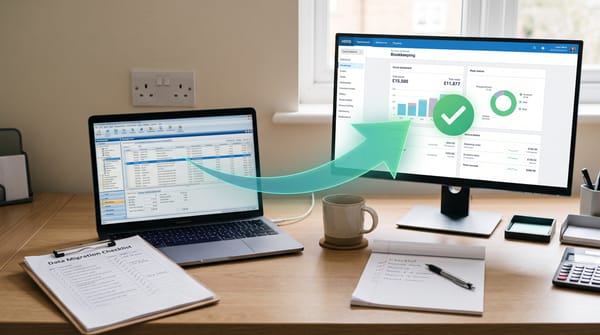
Best MTD Software for UK Sole Traders (2026): The Complete Guide
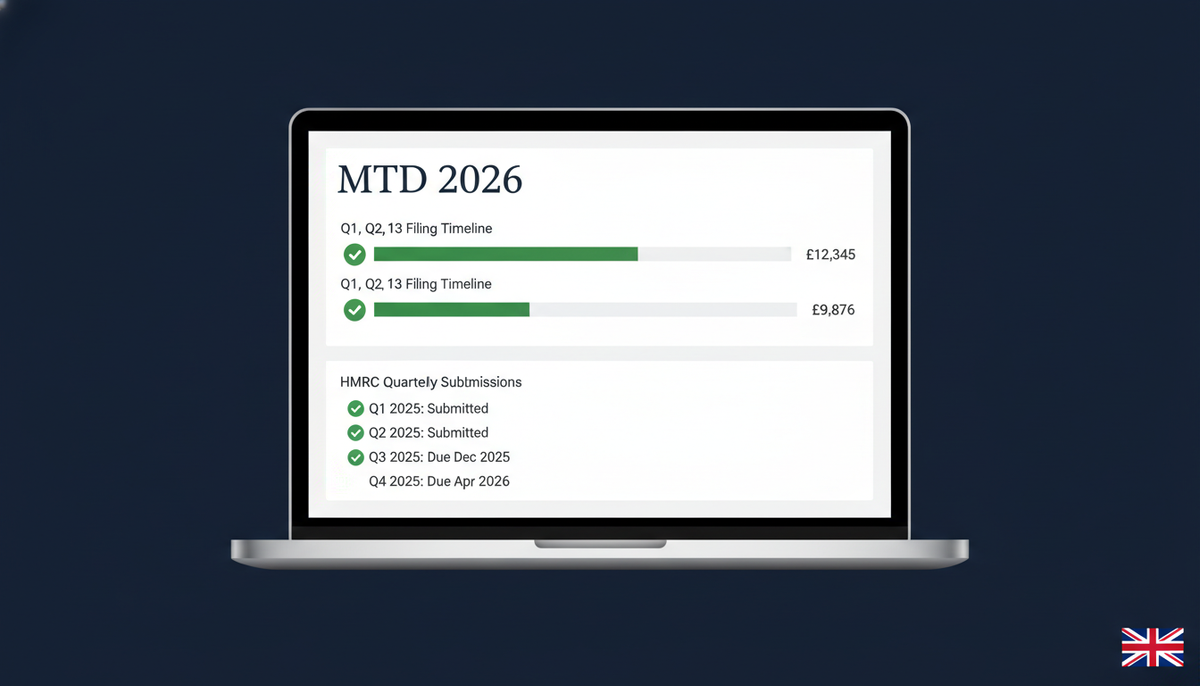
Best MTD Software for UK Sole Traders (2026): The Complete Guide
Making Tax Digital for Income Tax is live. From April 2026, sole traders and landlords with qualifying income above £50,000 must use HMRC-recognised software to keep digital records and submit quarterly updates. A second wave — those with income above £30,000 — follows from April 2027. If you're self-employed in the UK and haven't yet picked your MTD software, this guide covers every serious option, what each costs, and which one fits your situation.
This isn't a shortlist of the most-marketed tools. It's a practical comparison of what's actually HMRC-recognised, what covers all income sources, and what works if you already use specific accounting software or banking apps.
Not sure what MTD for Income Tax actually requires? Read our complete plain-English guide first.
What Is Making Tax Digital? The Complete Guide
TL;DR: The Short Version
- Best overall for sole traders: Xero Ignite (£18/month) -- most complete, accountant-accessible, handles all income sources.
- Best free option: FreeAgent (free with a Mettle or NatWest business account) — full MTD IT coverage including property income.
- Best for card-payment businesses already using SumUp: SumUp Accounting (free, built on Sage) — but sole-trader income only, no property.
- Best for spreadsheet die-hards: VitalTax or 123 Sheets (bridging tools, from £10–£12/year) — submit from Excel without changing your workflow.
- Avoid: Anything marketed as "MTD-ready" that isn't HMRC-recognised — they cannot file quarterly updates.
What "HMRC-Recognised" Actually Means
There are two types of software claiming to support MTD. "HMRC-recognised" software has been through HMRC's vendor registration process and is authorised to submit quarterly updates directly. "MTD-ready" software has not — it may import your data or format it, but it can't actually file with HMRC on its own.
The difference matters because only HMRC-recognised software satisfies the digital records requirement and can make the submissions that MTD demands. We've covered the distinction in detail in our MTD-Ready vs HMRC-Recognised guide. The HMRC-recognised tools in this roundup are listed on HMRC's own software provider page and verified for MTD for Income Tax.
The Best MTD-Compatible Options in 2026
1. Xero — Best for Most Sole Traders Wanting Full Accounting
Xero is the most-used cloud accounting platform for UK sole traders and small businesses, and it's been HMRC-recognised for MTD for Income Tax. The entry-level Ignite plan (£18/month) covers most sole traders: unlimited invoices, bank reconciliation, expense tracking, and quarterly MTD submissions. Xero Grow (£39/month) adds payroll and more complex multi-currency features.
Who it's for: Sole traders who want comprehensive accounting with accountant access, not just MTD compliance. The professional ecosystem is huge — most UK bookkeepers work in Xero, making it easy to get help when needed.
Key limitation: It's the most expensive entry-level option in this list. If you only need MTD compliance with minimal features, you're paying for capabilities you won't use.
Coverage: Self-employment income ✓ | Property income ✓ | Accountant access ✓ | Multiple income sources ✓
2. FreeAgent — Best Free Option for Most Sole Traders
FreeAgent is genuinely free for sole traders who open a business account with Mettle (NatWest Group's free business bank for sole traders) or NatWest/RBS. Without the bank account, FreeAgent costs £19/month. HMRC-recognised, comprehensive, and trusted by a large base of UK freelancers and sole traders.
FreeAgent stands out because it handles property income alongside self-employment income — something many cheaper or free tools don't. It also supports accountant access and has Self Assessment filing built in, meaning your accountant can both manage your books and file your annual return from the same platform.
Who it's for: Sole traders who can open a Mettle business account and want full bookkeeping plus MTD compliance at no cost. Also landlords with both self-employment and property income.
Key limitation: The free version requires the Mettle/NatWest account. If you want to stay with your existing bank, you're paying £19/month — competitive but not free.
Coverage: Self-employment ✓ | Property income ✓ | Accountant access ✓ | Self Assessment ✓
3. QuickBooks — HMRC-Recognised with Strong App
QuickBooks by Intuit is HMRC-recognised for MTD for Income Tax. The Simple Start plan (£16/month) covers basic bookkeeping and MTD submissions. The interface is polished, the mobile app is among the best available, and Intuit Assist (AI-driven categorisation) is genuinely useful for transaction matching.
Who it's for: Sole traders already invested in the QuickBooks ecosystem, or those who prioritise mobile app experience and AI-powered bookkeeping features.
Key limitation: The price increase has made QuickBooks noticeably more expensive than the competition, and the price-to-feature ratio at Simple Start is weaker than Xero Ignite for most UK sole traders.
Coverage: Self-employment ✓ | Property income ✓ | Accountant access ✓
4. Sage — HMRC-Recognised for Established Users
Sage Accounting (formerly Sage Business Cloud) is HMRC-recognised and covers MTD for Income Tax. The Sole Trader plan is free for the first three months, then around £15/month. Sage has a larger presence in more traditional or established businesses. If you have a bookkeeper who already uses Sage, staying in the same ecosystem makes sense.
Who it's for: Sole traders already using Sage, or those working with an accountant or bookkeeper whose practice runs on Sage.
Key limitation: The Sage Sole Trader experience is functional but less polished than Xero or FreeAgent for the self-employed market specifically. Sage's core strengths are in larger business accounting.
Coverage: Self-employment ✓ | Property income ✓ | Accountant access ✓
5. QuickFile — Best Free Option for Higher Volumes
QuickFile is genuinely free for accounts with fewer than 1,000 ledger entries per year (roughly 83 transactions per month) — enough for many sole traders. It's HMRC-recognised for MTD, has an Accountant Portal for practice management, and covers both self-employment and property income. Above 1,000 entries per year, it charges from £45/year — still very competitive.
Who it's for: Sole traders and small businesses who want free or near-free MTD-compliant bookkeeping with accountant access, and who are comfortable with a less consumer-polished interface than Xero or QuickBooks.
Key limitation: The interface is functional but dated compared to the major players. Strong accountant community backing (it's well-regarded in the bookkeeping profession) compensates for the UI.
We've published a practitioner-focused QuickFile review covering its strengths as a practice tool.
Coverage: Self-employment ✓ | Property income ✓ | Accountant access ✓ (via Accountant Portal)
6. SumUp Accounting — Best for SumUp Card-Payment Users
SumUp Accounting is free for sole traders who use SumUp's payment platform and is built on Sage's embedded accounting technology. HMRC-recognised for MTD for Income Tax since 2026, it turns card payment income, invoices, and Business Account transactions into quarterly MTD submissions automatically.
It's a logical fit if you already take payments through a SumUp card reader — the income data is already in the SumUp system. See our full SumUp accounting review for UK bookkeepers for a detailed verdict.
Who it's for: Sole traders in the SumUp ecosystem (card readers, Business Account) with straightforward self-employment income and no property income.
Key limitation: Sole-trader income only (no property), no accountant access, best value within the SumUp ecosystem. New to market — less track record than the established players.
Coverage: Self-employment ✓ | Property income ✗ | Accountant access ✗
7. Bridging Software: VitalTax, 123 Sheets, AbraTax — For Spreadsheet Users
If you keep records in Excel or Google Sheets and want to stay there, bridging software lets you submit quarterly updates to HMRC without switching to full accounting software. The software pulls data from your spreadsheet, formats it, and submits directly to HMRC.
The main options:
- VitalTax — from £10/year, Excel add-in or Excel file import, HMRC-recognised
- 123 Sheets — from £12/year, cloud-based bridging, HMRC-recognised
- AbraTax — free for limited use, simple interface
These are covered in detail in our MTD bridging software comparison. Bridging tools satisfy the MTD requirement but don't provide full bookkeeping — you're still maintaining your own records manually.
Comparison Table
| Tool | Price/month | HMRC-recognised | Property income | Accountant access | Best for |
|---|---|---|---|---|---|
| Xero Ignite | £18 | ✅ Yes | ✅ Yes | ✅ Yes | Most sole traders |
| FreeAgent (Mettle) | £0 (free with Mettle) | ✅ Yes | ✅ Yes | ✅ Yes | Free + full features |
| QuickBooks SS | £16 | ✅ Yes | ✅ Yes | ✅ Yes | QBO existing users |
| Sage Sole Trader | ~£15 | ✅ Yes | ✅ Yes | ✅ Yes | Sage ecosystem users |
| QuickFile (free) | £0 (under 1K entries) | ✅ Yes | ✅ Yes | ✅ Yes | Lower-volume traders |
| SumUp Accounting | £0 | ✅ Yes | ❌ No | ❌ No | SumUp ecosystem users |
| VitalTax | ~£0.83 (£10/yr) | ✅ Yes | ✅ Yes | Varies | Spreadsheet users |
What If You're Auto-Enrolled by HMRC?
From September 2026, HMRC began auto-enrolling around 294,000 non-compliant sole traders whose income qualified them for MTD IT but who hadn't yet signed up for a software provider. If you've received an HMRC auto-enrolment notice, you need to choose an HMRC-recognised software provider before your next quarterly deadline.
The next quarterly deadline for MTD IT submissions is 7 November 2026 (covering July–September trading period). See our MTD Q2 deadline guide for what you need to do before that date.
If you've been auto-enrolled and your income is straightforward self-employment, any of the HMRC-recognised tools above will satisfy the requirement. If you have property income alongside self-employment, make sure the tool you choose specifically covers property — not all of them do (SumUp Accounting, for example, is sole-trader income only).
What About the Soft Landing?
HMRC confirmed a soft landing period for 2026/27 MTD IT — meaning HMRC won't issue penalties for most record-keeping and late-filing failures in this first year, provided you make a good-faith effort to comply. The soft landing covers technical errors, not deliberate non-compliance.
The full detail of what the soft landing covers and what it doesn't is in our MTD ITSA Soft Landing guide. The key point: the soft landing doesn't mean you can ignore MTD — it means the consequences of getting it slightly wrong in year one are reduced. Getting the right software is still the right move.
The Right Pick For...
...a sole trader with no property income who wants to keep costs minimal: FreeAgent with a Mettle account (free) or QuickFile (free under 1,000 entries/year). Both are HMRC-recognised and cover everything you need.
...a sole trader who also has rental income: Xero, FreeAgent, QuickBooks, or Sage — all cover property income. SumUp and bridging-only tools will leave you uncovered for the landlord side.
...a sole trader who works with a bookkeeper: Whatever your bookkeeper already uses. If they're neutral, Xero is the most commonly used platform in UK bookkeeping practices. Ask your bookkeeper before committing.
...a sole trader who already takes card payments through SumUp: SumUp Accounting (free, built-in). If your income is entirely self-employment and all flows through SumUp, it's a genuine no-cost solution. If anything is more complicated, upgrade to Xero or FreeAgent.
...a sole trader determined to keep using Excel: VitalTax or 123 Sheets. These are the honest answer — they let you keep your spreadsheet workflow while still filing MTD-compliant quarterly updates.
FAQ
Is free MTD software genuinely HMRC-recognised?
Yes — FreeAgent, QuickFile, and SumUp Accounting are all free (or free with conditions) and all HMRC-recognised for MTD IT. The designation is independent of price. What matters is whether the vendor is on HMRC's list of recognised software providers for Income Tax, not what they charge for it.
Can I use more than one MTD software tool?
You can only authorise one software package at a time to submit to HMRC on your behalf. However, you can use tools alongside each other — for example, using Dext for receipt capture and Xero for the actual MTD submissions. The key is that one authorised tool does the submitting.
What happens if I miss the quarterly deadline?
Under the soft landing for 2026/27, HMRC is not issuing automatic penalties for most late or missed submissions. From 2027/28, a points-based penalty system applies. Each missed quarterly update adds a penalty point; once you reach the threshold (4 points for quarterly filers), a £200 penalty is charged. Points expire after 24 months.
Do I need separate software for Self Assessment?
The End of Period Statement (the annual finalisation under MTD IT) is different from the legacy Self Assessment return, but broadly replaces it for those in scope. Most HMRC-recognised MTD software handles both the quarterly updates and the final declaration. FreeAgent is notable for allowing sole traders to file their own final declaration without needing an accountant — a genuine differentiator.
Related Reading
- What Is Making Tax Digital? The Complete Guide for UK Small Businesses (2026)
- "MTD-Ready" vs "HMRC-Recognised": What Every UK Sole Trader Must Know
- MTD Bridging Software UK 2026: VitalTax vs 123 Sheets vs AbraTax
Affiliate disclosure: Some links in this article are affiliate links. If you sign up through them, we may earn a commission at no extra cost to you. We only recommend tools we've genuinely assessed.