
Otto Capture UK Review 2026: The No-Minimum Receipt Capture Tool Built for Small Practices
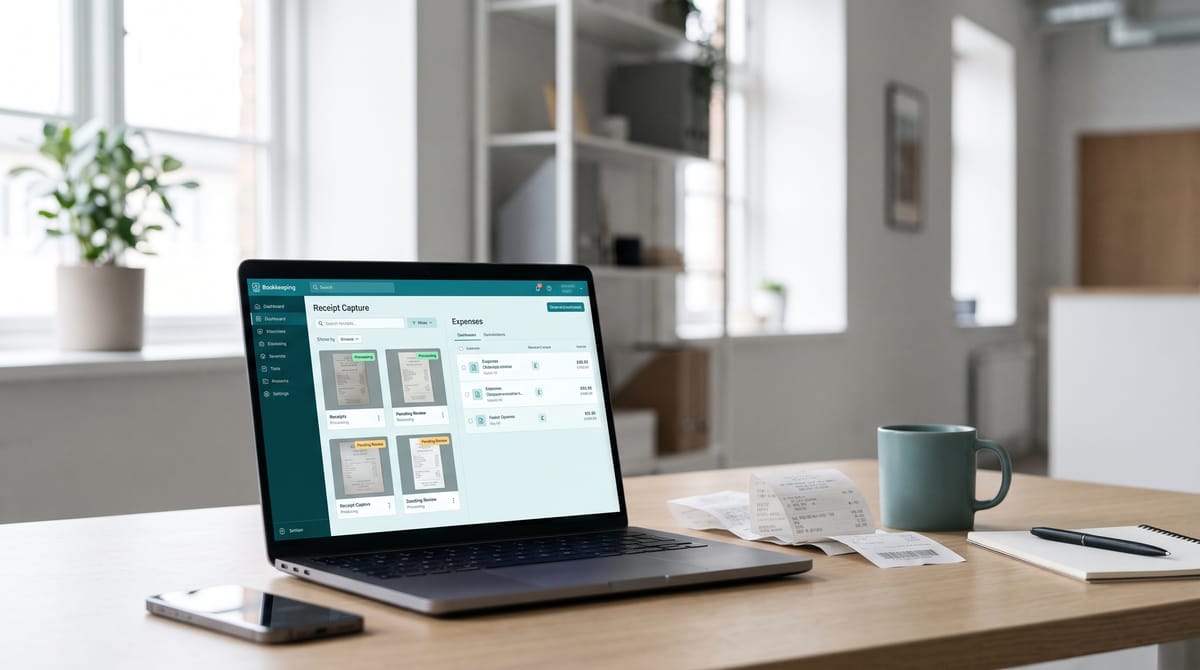
Otto Capture UK Review 2026: The No-Minimum Receipt Capture Tool Built for Small Practices
Receipt capture software has a small-practice problem. The tools that actually work well tend to come with 10 or 25-client minimums, annual contracts, and pricing structures built for firms twice your size. Otto Capture is a direct attempt to fix that. Built by a Cambridgeshire accountancy practice that grew frustrated with the same gap, it launched in mid-2026 with a single promise: you pay only for the documents you publish, with no minimum client numbers and no plan to choose up front. This review covers what Otto Capture actually delivers, what it costs, where it falls short, and who it suits in November 2026.
The receipt capture market is more crowded than it looks from the outside. our guide to the best UK receipt capture tools lists the main contenders, but the top of that list — Dext, AutoEntry, Hubdoc — tends to assume a practice of meaningful scale. If you have six or eight bookkeeping clients, the per-client minimum often costs more than the actual work warrants. Otto Capture is designed for that gap.
Comparing receipt capture tools before you commit? Dext is still the market benchmark — 14-day free trial, no card required.
Try Dext Free for 14 DaysTL;DR — Otto Capture in three bullets
- No client minimums, no plan to choose: each client is priced on its own documents (£9–£29/client/month), and a client with nothing published costs nothing.
- Full line-item extraction is included as standard, not an add-on credit — coding suggestions are drawn from that client's own history, not generic rules.
- Works with Xero, FreeAgent and QuickBooks Online. Sage integration is on the roadmap. Currently no mobile app — submission routes are email, WhatsApp and browser upload.
What is Otto Capture?
With Otto is a software company based in Ely, Cambridgeshire, founded by Emma James and Stuart Chapman. James also runs The Number Ninja, an accountancy practice, and that dual perspective shaped the product. Otto's first product was a bank reconciliation tool for Xero practices. Otto Capture, launched in June 2026 on the Xero App Store with FreeAgent integration going live in August 2026, is the company's move into document extraction.
The founding logic is worth understanding because it explains the pricing. James noted that smaller practices routinely hit minimum client requirements or oversized bundle plans when evaluating receipt capture tools. A practice with eight clients paying £12–£15 per client on a tool that requires a 10-client minimum is effectively subsidising two phantom clients. Otto Capture removes that floor entirely.
As of November 2026, the product is actively developed, with QuickBooks Online support added after an initial waitlist period (purchases and supplier credits only on QBO; sales invoices publish to Xero and FreeAgent only). Sage integration is listed as future development.
How Otto Capture works
The workflow follows four steps: capture, extract, review, publish.
Capture: Clients or practice staff send documents by uploading through a browser, forwarding to a practice-branded email address, sending via WhatsApp, or submitting through a client-specific web page. None of these routes require clients to create an account or install an app. Each client gets their own email address on a subdomain set up for your practice (for example, acme-ltd@yourpractice.ottocapture.email), or your own domain if you prefer full white-labelling.
Extract: Otto reads the document and pulls out supplier name, dates, totals, and individual line items. Line-item extraction is included at every tier — it is not an add-on credit, unlike some competitors where detailed line extraction costs extra.
Review: Otto suggests a nominal code and tax rate based on how that supplier has previously been coded for that specific client. The coding history is kept per client, so one client's treatment of a supplier never bleeds into another's. You review and adjust before anything reaches the ledger.
Publish: Once approved, the document publishes to Xero, FreeAgent, or QuickBooks Online, with the original document attached where the platform supports it.
Otto also offers a missing receipts chasing feature for Xero and FreeAgent clients: upload unreconciled bank transactions, strip anything the client does not need to explain, and share a link. The client answers each payment with a receipt, a note, or both — no account required. This is a useful addition that some larger competitors charge separately for or handle through a dedicated module.
All AI processing runs under a zero-data-retention policy: documents are not stored by the AI provider and are not used to train any model. For practices handling sensitive client information, that is worth noting explicitly.
Otto Capture pricing (November 2026)
Pricing is per client, per month, based on the documents published to the accounting platform that month. All prices exclude VAT.
| Tier | Monthly price per client | Included documents | Overage rate |
|---|---|---|---|
| Small | £9 | Up to 50 | 18p per document |
| Medium | £15 | Up to 125 | 12p per document |
| Large | £29 | Up to 350 | 8p per document |
Three things make this model genuinely different. First, each client sits on whatever tier costs least for that month's published documents, automatically — you do not choose a plan up front or move clients between plans. Second, there are no price cliffs: if a client goes 10 documents over their tier's allowance, you pay the per-document overage rate for those 10 documents rather than jumping to the next tier's full price. Third, a client with no documents published in a month costs nothing. For practices with seasonal or irregular clients, that last point matters considerably.
A 30-day free trial is available. There are no annual contract requirements stated in the current pricing.
How Otto Capture compares to Dext and AutoEntry
The UK receipt capture showdown covers Dext and AutoEntry in depth, but here is how Otto Capture positions alongside them at the small-practice level.
| Feature | Otto Capture | Dext Essentials | AutoEntry (Platinum) |
|---|---|---|---|
| Entry price | £9/client, 1 client min | £12/client, 10-client min | £119.35 for 500 credits |
| Client minimum | None | 10 clients | None (credit bundles) |
| Line items included | Yes, standard | Yes (uses credits) | 2 credits per line-item doc |
| Dormant client cost | £0 that month | £12/month still billed | No extra charge (shared credits) |
| Submission routes | Email, upload, WhatsApp, web page | Email, app, upload, WhatsApp, Fetch | Email, app, upload |
| Ledger integrations | Xero, FreeAgent, QBO | Xero, QBO, Sage, FreeAgent + 36 more | Xero, QBO, Sage, FreeAgent |
| Missing receipt chasing | Yes (Xero + FreeAgent) | Yes (Fetch feature) | No |
| Free trial | 30 days | 14 days | 25 free credits, no card |
The clearest comparison is for a practice with six active clients, each sending around 30–40 documents per month. On Dext Essentials, the 10-client minimum means you are paying £120/month for 10 clients whether you have them or not. On Otto Capture, six clients each on the Small tier costs £54/month, with no phantom clients. That difference closes as your practice grows — at 15 active clients, Dext's per-client pricing becomes competitive again, particularly given its broader integrations and richer workflow tools.
For practices on Sage, Otto Capture is not yet an option — Sage integration is planned but not live. AutoEntry remains the natural choice there, or Dext, which integrates with Sage across its practice plans. See Dext's full UK pricing breakdown for per-client costs across the Solo, Essentials, and Advanced plans.
What Otto Capture does not yet do
It is worth being direct about the current limitations, because the product is still relatively new.
- No Sage integration. Listed as future development. If your clients are on Sage, Otto Capture cannot help you yet.
- QBO supports purchases only. Sales invoices and credit notes publish to Xero and FreeAgent only, not QuickBooks Online.
- No dedicated mobile app. Clients submit via email, WhatsApp, or browser. That works well in practice, but practitioners accustomed to Dext's mobile app will notice the difference.
- No supplier statement reconciliation. Dext includes this for clients with complex supplier account management; Otto Capture currently focuses on bills, receipts, and invoices.
- No auto-publishing rules. Every document requires manual review and approval before it reaches the ledger. That is a deliberate design choice — Otto's founders are explicit that AI suggestions should be checked, not automated — but practices used to Dext's auto-publishing for trusted suppliers may find the review step adds time.
The EazyCapture review on this site covers agentic bookkeeping tools with more automation for practices that want the AI to do more without a review step.
Who Otto Capture suits
The right fit is relatively specific. Otto Capture works well for:
- Practices with fewer than 15 active bookkeeping clients where Dext's minimums make the monthly cost disproportionate to actual volume.
- Practitioners starting out who want a low-commitment way to add receipt capture to their service without committing to a 10-client minimum before they have them.
- Practices with seasonal or lumpy clients — a client who goes quiet for three months costs nothing during those months.
- Xero- and FreeAgent-only practices. If your whole client book is on one or both of those platforms, the integration gap does not apply to you.
- Practitioners who value detailed audit trails and want every document reviewed before it reaches the ledger, rather than relying on automatic posting rules.
If your practice has 20 or more active bookkeeping clients, most with high document volumes, Dext's Essentials or Advanced plans will likely offer better value and a more comprehensive feature set, including AI Assist for automated coding rules, the Fetch portal-retrieval tool, and 36+ ledger integrations. See how a lean bookkeeping app stack can be built around receipt capture to understand where this tool fits in the broader toolset.
The right pick for...
- A sole bookkeeper with 5 Xero clients: Otto Capture at £45/month total, with no phantom minimums.
- A practice of 15+ clients with active Sage users: Dext or AutoEntry until Otto's Sage integration arrives.
- A very small practice that wants the lowest absolute monthly spend: Receipt Bot starts from £10/month for a small bundle — worth comparing if volume is predictably low.
- A practice that needs supplier statement reconciliation: Dext is the choice; try Dext free for 14 days.
- A practice prioritising client simplicity over features: Otto's WhatsApp submission and no-login web page approach makes it among the easiest tools for clients to use without training.
Frequently asked questions
Does Otto Capture work with MTD for Income Tax?
Otto Capture processes and publishes documents to your ledger platform (Xero, FreeAgent, QBO). MTD compliance is handled by the ledger platform, not the capture tool — so your compliance status depends on which platform you are using, not on Otto Capture itself.
Is client data secure with Otto Capture?
Otto states that all AI processing runs under a zero-data-retention policy, meaning documents are not stored by the AI provider and are not used for model training. The company is based in the UK, in Ely, Cambridgeshire.
Can businesses (not practices) use Otto Capture?
Yes. Otto Capture is available for businesses doing their own books, at the same pricing as practices, with the same features. The pricing page at withotto.app is explicit that a business pays what a practice pays for each client.
What happens if I want to try it and it does not work out?
The 30-day free trial requires no card, and the pricing terms state no annual contract obligation. Otto's founders have been clear that simplicity and low lock-in are design goals, not marketing copy.
Related reading
- Best Receipt Capture Software for UK Bookkeepers (2026) — the full roundup, including Dext, AutoEntry, Hubdoc and Receipt Bot
- Dext vs Hubdoc vs AutoEntry: UK Receipt Capture Showdown 2026 — head-to-head on pricing, accuracy and practice workflow
- The Lean UK Bookkeeping App Stack 2026 — where receipt capture fits in a full low-cost toolset
Affiliate disclosure: Some links in this article are affiliate links. If you sign up through them, we may earn a commission at no extra cost to you. We only recommend tools we've genuinely assessed.